When Nothing Works for Anxiety

In many immigrant families, there is already shame about expressing emotions. But then, you work through it enough to try to address difficult feelings. But nothing seems to work. Anxiety is especially guilt-inducing because it seems as though you should be able to control how worried you become about something. But what if we were to strip away the guilt, shame and judgmental thoughts about having emotions? It would create more room to examine why nothing is working.

Often, patients come in and they say, I’ve tried everything to calm anxiety but for some reason, nothing works. And what do I say? First, let’s put all that terrible judgment aside as best as possible. Once we do that, I take a closer look at two important things, technique and consistency.

So now, let’s go over some common problems with technique around three common anxiety reduction tools.

First, breathwork. You want to breathe in through your nose and out through your mouth. Why does this matter? Because if you’re breathing in and out through your mouth, you’re actually taking in less oxygen and feeling more lighted-headed and anxious. You may even start to feel panicky.

Meditation. You wonder whether you’re doing it wrong, which gets in the way of allowing your mind to observe thoughts that are coming in. They can be scary, ugly, weird, silly, anxiety-provoking or boring, but whatever their nature, their just thoughts. See, judgment sneaks in even when we try to keep it at bay. But there isn’t a need to judge yourself on how you’re doing. If you’re sitting and taking the time to meditate, you’re doing it well.

Journaling. You may have been told to write down your anxious thoughts so that you can move them away from you. Or that writing out your thoughts can help you process them. But then you think, what should I write? If you go blank once you open up that journal, write about anything at all. Write about how you’re hungry or sleepy or have dishes to do. Write about how you’re bloated and annoyed. Write that you can’t think of anything to write about. Write down your grocery list. As you write random things, you’ll get to what’s underneath the surface. Take your time. You’ll get there.

Now, as far as all three, consistency is key. You may have tried one or all of these a few times here and there. But have you tried them consistently, every day for a couple weeks, a couple months? If you haven’t, try one for a month. See how that feels. Then you’ll have enough data to tweak the tool a bit. Technique and consistency bring results.

If you need some guidance around this, you might find Breathe and Release, a 12 month guided calming journal helpful. Go to the contact page and request more information.

What Is Manifestation? 

Manifestation is just your whole mind and body coming together and synchronizing toward that thing you envision. It makes you tear up with joy, at just even the thought of it. Your neurons, your nervous system, your chakras, your heart and your very soul are giving you a standing ovation as you move closer to that vision you want so deeply. 

So continue to point your eyes, heart and being toward that thing you want to begin, continue or finish. It pulls you so strongly because it is what you were made to do.

So keep moving. Manifest. 

We Have the Gift of Time in This Moment

What will you do with it?

We have fears, anxieties, other people’s voices in our heads telling us what we can’t do. But are these opinions even based on facts? What would you have to clear out of the way in order to start pursuing your dreams today? Whose voice would you have to quiet down in your head so that you can pursue your vision? Picture what you want. What are the specific steps to getting there? What does it feel like to accomplish that dream? Who is included in that dream and who is not? Who supported you no matter how difficult it got and who only spoke negatively about what you wanted to accomplish? How would your life change if you pursued what you wanted? Where would you live and who would you live with? What would rest look like?

We have the gift of time only in this moment. We make guesses and assumptions about how much time we have, but we really don’t know, do we? We think of reasons and difficulties, obstacles, and barriers of why we can’t accomplish what we’d like that also is time spent, but is it being spent in the way that you want? 

What will you do today with the gift of time? It doesn’t have to be a big huge thing. It could be that you complete something small to get to your larger goal. Whatever it is, know you have this moment to honor what you’d like to pursue.

You Can Stop Feeling Guilty. You Are Enough.

Do you ever wonder if there will ever be a time you don’t feel this way?

Guilt is often bred by family expectations. You’re doing too much or not enough. Your personality is too loud, too boisterous, too emotional. Yet you can never be smart enough, kind enough or thoughtful enough. You’re overshooting and underperforming.

Who’s side are you on when your parents fight? Couldn’t you have cleaned that better, studied harder, been more respectful to your aunties and uncles when they visited? Be quiet but talk louder. We can’t hear you but you don’t get to have a voice.

Nothing is enough. So what to do? Embrace what you love about yourself. Acknowledge all your wonderful ways. Be enough for you.

Release the Shame. It’s Not for You.

Some days we may ask ourselves whether anyone else would be able to relate to the pain we’re experiencing or the crazy of what happens behind closed doors.

Some may not. But there are many who do because this is life. If we’re breathing, we have or will experience challenges. We fear something is wrong with us because of our story or because we feel we’re unique in our pain, but others have similar stories they feel they must keep locked in. They worry about blaming others, shaming others, others who they love but were hurt by. It’s not about that though, is it? It’s about releasing pain. This is why sharing stories is like sewing together a thick, comforting blanket of healing.

This is why I tell my story. And what is yours? The one you may hold undue guilt or shame about? The one you believe no one would understand? Release it in writing, in song, in dance. Allow someone you trust to help walk with you on the journey. Release the shame. It’s not for you.

The Plight and Beauty of the Eldest Daughter

If you’re the eldest daughter, you are likely the keeper of the family. It’s an important role, I suppose. It’s also a very exhausting role. Not only are you seen as the confident, capable, responsible one, but you own it. You own all of it, the title, the diligence, the hyper-vigilance, and the silent heaviness intrinsically tied to it.

I commented on Eldest Daughter Syndrome in Newsweek magazine, and the many ways it can have us feeling like a walking contradiction. We are expected to protect younger siblings, the home, family reputation and sometimes our parents, even from each other. We are to do it with grace, a smile and look radiant all the while. The charge is grand, grandiose really. But we do it because it is all we’ve ever known.

Despite the burden, there is a beauty that comes along with being the eldest. First born children are often conscientious and driven to excel in school, career and relationships. They are solution-based and diligent. We dive into high stress situations and figure out how to resolve them. We get shit done.

The tragedy is that we feel a sense of restlessness and angst even when there is nothing to do, nothing to fix, nothing to complete. Yet, when we aren’t doing things, we ourselves may feel incomplete. We create tasks to work on, to finish, to produce. The doing feels perpetual.

Rest is a luxury, we tell ourselves. Mindfulness is a mirage. But these ideas are false. They were taught early and as a part of a larger system where girls and women must care for and nurture others. We are told it is our identity.

Yet, we can preserve the beauty of this role and embrace the ways it has strengthened us. To do so, we must leave the toxicity behind. It’s not a simple thing when how we perform seems to be intrinsically connected to who we are. But so many things are paradoxically connected. Our true work now is to pull it apart. And this is how we begin.

Permission is powerful. Allow yourself to shift away from unhealthy learned messages, even if uncomfortable at first. Guilt and shame may rise just as you try to push back against long-reinforced ideas, but that doesn’t mean these feelings are accurate. Remain curious about why you feel what you feel, and whether those are learned ways to feel or whether they’re valid.

Increase in your sense of presence. Move with mindfulness to connect with what you truly desire out of a situation, relationship or interest. In each moment, ask yourself if it is bringing you joy, not whether it’s what others expect of you.

Separate what needs to get done versus what you’d like to do. Often eldest daughters have had to handle talks out of necessity but less often are asked what we want. Ask yourself what you’d like to do rather than what you have to do. The have to’s aren’t going anywhere. Fiercely make space for what you want.

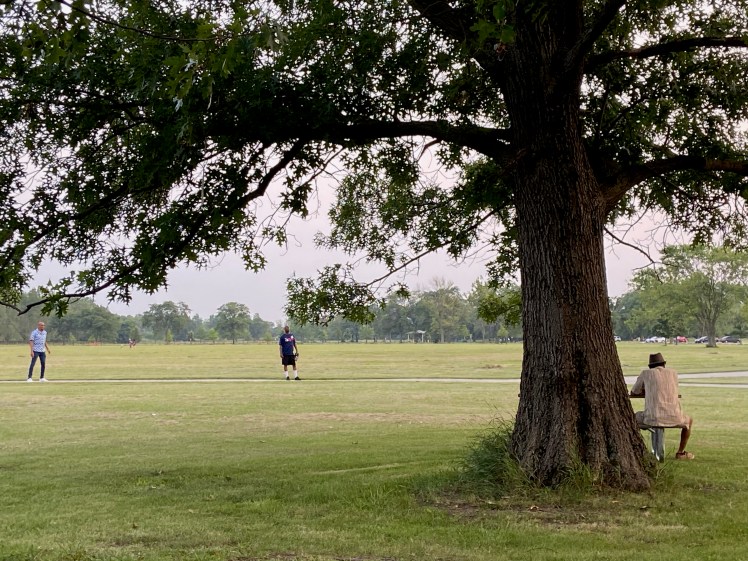
Embrace rest. Maybe you don’t want to do anything at all. Maybe staring at a tree, reading, walking without a destination, is what rest looks like for you. Do that. And do it even despite the guilt, until it starts to fall away. And it will. Because much of the guilt we feel is not real, it’s induced. Resting is not selfish. It is balance.

Honor all you’ve done, how loving you have been, how well you’ve cared for others and know that this very moment is for you. The past is gone. The future hasn’t happened. Right now is everything we have. Rest daughter, in this moment. You’ve done the work.

A note: Although I’m speaking specifically about eldest daughters, it is sometimes a younger daughter or only child who must take on the position of the eldest for various reasons. Sometimes, it may even be a younger male in the family who takes on the role of the eldest, although this is rare just because of the structure of most cultures and views of females. Either way, those placed in the role of eldest may hold a deep sense of care and responsibility for others and the outcome of circumstances. For all carrying this weight, I wish you rest and care.

Believe Me When I Tell You

The body and mind become so weary from holding secrets. I had now hid my relationship for months. My parents suspected nothing but they also always assumed I was doing something I shouldn’t be. I was groomed to be stealthy. It was without intention they created this in me. They didn’t know how to nurture autonomy in this big, foreign country. Maybe even for themselves. 

The weight of what I knew and all the what ifs were getting too heavy. I couldn’t take it much longer. And then it happened, before I realized what was coming out of my mouth. One afternoon, as Mom shook her head while she watched a show about interracial couples, I blurted out that I had an American boyfriend.

She stared at me for a few seconds. She gritted her teeth. I prepared for a smack. And then she went back to watching her show, calling me silly and waving me away. It was too much for her. She couldn’t even imagine it. 

I walked out. I went straight to my boyfriend’s house.

Summary of a scene from Where the Tiger Dwells, a memoir

A Million Miles of What They Carried

What did they carry with them, my parents, over thousands of miles? What pieces of jewelry did they carefully choose? Which did they keep and which did they have to tear away from? Did they want to wear them all on each of their fingers, filling them as high as they’d fit? As many chains that could go around their necks? What did they stuff into their pockets? What are the most valuable things, maybe viable things, to an immigrant?

Did they wonder which clothes would be most acceptable? Or did they even worry about this? Did they want to take all their clothes, even the ones that were a little snug from high school that reminded them of good times with their childhood friends? Did they want to take some of their shoes, maybe all of them? But would their shoes work there? They had heard it was bitter cold, almost uninhabitable. How do you then dress for that? How, I mean, what, do you put on?

Did they speak to each item that meant something, the ones they couldn’t take with? The doors, the walls with the little lizzards sitting still like decor, the little random steel cups and clay pots in the kitchen? Did they say goodbye, or maybe one day I’ll see you again? What did they think would happen? That they’d never return to the ground and sky and trees they knew so well? The childhood toys, dolls, the table they ate their meals on, where they sat with their mothers and fathers, their siblings, where they prayed over their dal, rice, chutney, chicken. They couldn’t take those.

What about the well in the backyard, the one they leant over as children, yelling into it, echoes responding with giggles. What stories had they told their friends about the well, as they all encircled it, bent over slightly, seeking the bottom? What lay in the darkness? What fears had they buried there and what new ones would well up?

Did they wave goodbye to the animals that freely roamed the dirt roads in front of their houses, the pigs, the dogs, as animals should? Isn’t it in fact their home too? Isn’t freedom for all? Did they whisper into the creatures’ ears one last time, did they give some of them names, letting them know they were going to a far away place where the animals wouldn’t love them the same? Did they know that then? Did they know foreign meant foreigner, a bad word, outsider, feared, to be ridiculed, cursed at, in a place that would never quite feel like home? Did they leave space for this as they were gathering all the things they would carry?

The Unseen Stings Most

I don’t have to be called a name to feel the sting of hate. It’s in the flow of society. It’s how I feel moving through a space. Space, without gravity. No foothold or anything else to anchor onto. Just the knowing.

Because it’s in the air. I, we, breathe it.

There are more often no names or obvious gestures of being discarded. I hate that way I feel, so unsettled without a way to touch or point at it. That’s it, don’t you see? I scream in my mind, wanting to yell to bystanders who aren’t innocent in their denial. They scoff with, “Oh, you’re just being,” or “Oh, everything’s not about that.” For some, it is though. So then the translucence of it is what makes me then question it. Question myself rather.

And then I pull myself back, toes touching ground, heart reconnecting with soul. This soul that allows intuition to reverberate back into my body, confirming what is real, believing it, if only within myself. To know, to realize this, is what I need to remain grounded, to remain safe, mind and body.