Is It Duty or Trauma In The Making

Photo by Anna Shvets on Pexels.com

Rules do not always mean safety. In fact, they can cause the very harm we’re trying to prevent. To be told to be dutiful provides boundaries, but do they exist to keep us safe or to lock us in and be more vulnerable to danger? Duty is a heavy word, sometimes a powerful thing that fills our hearts with honor and reinforces a sense of community. It is a parent’s duty to care for their child. Yet, this same word can then be used to imprison a woman to fulfill her wifely duties.

When raised in duty, it is difficult to know if it is the elixir or the poison. People just automatically follow what they’re taught. But somewhere along the way, there’s a separation between what we’re told and what we want. When these two are misaligned but we’re forced to comply, duty is becoming something unhealthy. It’s important to know the difference. Otherwise, we can be pushed into doing things we may not feel are the best for us. We can integrate this forced way of seeing the world and then require that others comply with these same controlling views.

You might sometimes wonder how whole groups of people agree with some scary notion of how things should be. A classic example is Margaret Atwood’s book, The Handmaid’s Tale. A society of people thought that controlling girls and women should become the norm. This society believed that it is a higher power’s will for females to be stripped of power and be used for whatever their delusions thought necessary.

This is why we must stay vigilant in understanding the difference between duty and trauma. The definition of a word, a concept, a law, how a human being is labeled, should not be taken lightly. Protection of self means protection of others.

Three Ways to Recognize Cultural Trauma

Cultural trauma has harmed people deeply, overpowering how we operate, whether by society’s standards or family expectations, often an overlap of both. Here are some ways to understand whether it’s something that impacts you. If so, examine it so you can begin to heal.

  1. Separate cultural norms from trauma. Understand what you uniquely need according to who you are in dynamic ways, from a cultural perspective. What are the unique traits that define you in the community you’ve been a part of? What intrinsic interests do you have that are tied to your culture? These are the healthy aspects of cultural influence. Also identify the ways culture may feel restrictive and may even be harmful to your well being, sense of safety, and individuality.
  2. Pull apart what you know to be your beliefs versus society’s or family’s belief systems. Beliefs are deeply rooted and can be harder to pull apart versus understanding more tangible needs, such as what was mentioned in point one. We can be influenced by others’ perspective, especially family, but when families are enmeshed, meaning lack of clarity in how each person is different than the other in their own beliefs and views. Lines are blurred regarding what each person likes, wants and hopes for the future. This creates issues in setting boundaries and having others respect them.
  3. Notice how difficult or easy it is to disagree with cultural norms, especially related to how they do or don’t apply to your life. Is it taboo to do something outside of cultural norms? Would you be judged? Would you be shunned? Sometimes people living outside of cultural restrictions are even disowned.

Learn where the boundaries are between cultural demands and what you authentically seek out of life. It’s healthy to recognize these differences. It leads to the ability to say no. It leads to finding a sense of self after living under restrictive cultural mandates that may have been a barrier to peace, joy and the freedom to connect with ourselves. It leads to embracing the parts of culture that define us and separate from the ones that are enforced upon us.

Spanking or Beating? The Language We Use to Justify Harm

Children in immigrant families often don’t have language to identify what we’re experiencing. Is it spankings or beatings, discipline or trauma? Much of what happens behind closed doors is normalized because it has gone on for generations. However, that doesn’t make it alright. Not everything can be included under the umbrella of culture.

When we don’t know what to call something, we also don’t know how it affects us. If it’s just what happens, we tend to minimize how painful it is. But calling it out for what it is gives it the proper attention and weight. To name something means to identify and examine it, to possibly change it or keep it the same. Naming ultimately helps us see how we see ourselves.

An article by Sunil Noronha powerfully describes the harm endured by a child who is beaten under the guise of discipline: Spare the child, stash the rod, it’s time to make your minds broad

Name what you feel. It holds power.

Photo by James Wheeler on Unsplash

Is There a Sadness In Your Parents You Can’t Quite Understand?

Your parents may also have difficulty identifying what it is. But then, when you think about it, they left everything they knew, and likely most everyone they knew, to find opportunity. That was their main goal. Opportunity. And really it can be translated to mean deep sacrifice, even sacrifice of connecting with themselves.

So everything else takes second place. I often wonder if my parents had time to grieve. But I think I know the answer. Many had little time to pause, breathe, rest, in the ways they deserved. And may have unintentionally passed the heartache down to their children. Generational patterns, modeling, trauma, we can’t always tangibly place it, because it sits in our bones. But you know it’s there.

Work on identifying the ways you also hold a sadness, maybe for them, for yourself, for both. Take it, examine it, try to know it so you can release it. Allow it to stop here.

Four Reflections on Nurturing Your Younger Wounded Self

If you have wounds from childhood that continue to come up and you’re not sure how to address them, write down these reflections to explore what you needed back then, and how those needs have been carried into adulthood.

After you’ve reflected, and maybe written some thoughts on them, make sure to take care of your current self. Going back into childhood and exploring the hurt can feel heavy. So take a walk, a nap, talk to someone you trust, or whatever soothes your soul.

  • When you see your younger self at a moment of deepest vulnerability what does that look like? What would you want to say to yourself in that moment?
  • What is something you now understand that you would like to show the child? Maybe it was something you were very confused about back then?
  • What would you want to give yourself? Is it an object, words, an embrace?
  • Lastly, what is the one thing your younger self must absolutely know to be able to thrive going forward?

When Nothing Works for Anxiety

In many immigrant families, there is already shame about expressing emotions. But then, you work through it enough to try to address difficult feelings. But nothing seems to work. Anxiety is especially guilt-inducing because it seems as though you should be able to control how worried you become about something. But what if we were to strip away the guilt, shame and judgmental thoughts about having emotions? It would create more room to examine why nothing is working.

Often, patients come in and they say, I’ve tried everything to calm anxiety but for some reason, nothing works. And what do I say? First, let’s put all that terrible judgment aside as best as possible. Once we do that, I take a closer look at two important things, technique and consistency.

So now, let’s go over some common problems with technique around three common anxiety reduction tools.

First, breathwork. You want to breathe in through your nose and out through your mouth. Why does this matter? Because if you’re breathing in and out through your mouth, you’re actually taking in less oxygen and feeling more lighted-headed and anxious. You may even start to feel panicky.

Meditation. You wonder whether you’re doing it wrong, which gets in the way of allowing your mind to observe thoughts that are coming in. They can be scary, ugly, weird, silly, anxiety-provoking or boring, but whatever their nature, their just thoughts. See, judgment sneaks in even when we try to keep it at bay. But there isn’t a need to judge yourself on how you’re doing. If you’re sitting and taking the time to meditate, you’re doing it well.

Journaling. You may have been told to write down your anxious thoughts so that you can move them away from you. Or that writing out your thoughts can help you process them. But then you think, what should I write? If you go blank once you open up that journal, write about anything at all. Write about how you’re hungry or sleepy or have dishes to do. Write about how you’re bloated and annoyed. Write that you can’t think of anything to write about. Write down your grocery list. As you write random things, you’ll get to what’s underneath the surface. Take your time. You’ll get there.

Now, as far as all three, consistency is key. You may have tried one or all of these a few times here and there. But have you tried them consistently, every day for a couple weeks, a couple months? If you haven’t, try one for a month. See how that feels. Then you’ll have enough data to tweak the tool a bit. Technique and consistency bring results.

If you need some guidance around this, you might find Breathe and Release, a 12 month guided calming journal helpful. Go to the contact page and request more information.

We Have the Gift of Time in This Moment

What will you do with it?

We have fears, anxieties, other people’s voices in our heads telling us what we can’t do. But are these opinions even based on facts? What would you have to clear out of the way in order to start pursuing your dreams today? Whose voice would you have to quiet down in your head so that you can pursue your vision? Picture what you want. What are the specific steps to getting there? What does it feel like to accomplish that dream? Who is included in that dream and who is not? Who supported you no matter how difficult it got and who only spoke negatively about what you wanted to accomplish? How would your life change if you pursued what you wanted? Where would you live and who would you live with? What would rest look like?

We have the gift of time only in this moment. We make guesses and assumptions about how much time we have, but we really don’t know, do we? We think of reasons and difficulties, obstacles, and barriers of why we can’t accomplish what we’d like that also is time spent, but is it being spent in the way that you want? 

What will you do today with the gift of time? It doesn’t have to be a big huge thing. It could be that you complete something small to get to your larger goal. Whatever it is, know you have this moment to honor what you’d like to pursue.

Release the Shame. It’s Not for You.

Some days we may ask ourselves whether anyone else would be able to relate to the pain we’re experiencing or the crazy of what happens behind closed doors.

Some may not. But there are many who do because this is life. If we’re breathing, we have or will experience challenges. We fear something is wrong with us because of our story or because we feel we’re unique in our pain, but others have similar stories they feel they must keep locked in. They worry about blaming others, shaming others, others who they love but were hurt by. It’s not about that though, is it? It’s about releasing pain. This is why sharing stories is like sewing together a thick, comforting blanket of healing.

This is why I tell my story. And what is yours? The one you may hold undue guilt or shame about? The one you believe no one would understand? Release it in writing, in song, in dance. Allow someone you trust to help walk with you on the journey. Release the shame. It’s not for you.

The Plight and Beauty of the Eldest Daughter

If you’re the eldest daughter, you are likely the keeper of the family. It’s an important role, I suppose. It’s also a very exhausting role. Not only are you seen as the confident, capable, responsible one, but you own it. You own all of it, the title, the diligence, the hyper-vigilance, and the silent heaviness intrinsically tied to it.

I commented on Eldest Daughter Syndrome in Newsweek magazine, and the many ways it can have us feeling like a walking contradiction. We are expected to protect younger siblings, the home, family reputation and sometimes our parents, even from each other. We are to do it with grace, a smile and look radiant all the while. The charge is grand, grandiose really. But we do it because it is all we’ve ever known.

Despite the burden, there is a beauty that comes along with being the eldest. First born children are often conscientious and driven to excel in school, career and relationships. They are solution-based and diligent. We dive into high stress situations and figure out how to resolve them. We get shit done.

The tragedy is that we feel a sense of restlessness and angst even when there is nothing to do, nothing to fix, nothing to complete. Yet, when we aren’t doing things, we ourselves may feel incomplete. We create tasks to work on, to finish, to produce. The doing feels perpetual.

Rest is a luxury, we tell ourselves. Mindfulness is a mirage. But these ideas are false. They were taught early and as a part of a larger system where girls and women must care for and nurture others. We are told it is our identity.

Yet, we can preserve the beauty of this role and embrace the ways it has strengthened us. To do so, we must leave the toxicity behind. It’s not a simple thing when how we perform seems to be intrinsically connected to who we are. But so many things are paradoxically connected. Our true work now is to pull it apart. And this is how we begin.

Permission is powerful. Allow yourself to shift away from unhealthy learned messages, even if uncomfortable at first. Guilt and shame may rise just as you try to push back against long-reinforced ideas, but that doesn’t mean these feelings are accurate. Remain curious about why you feel what you feel, and whether those are learned ways to feel or whether they’re valid.

Increase in your sense of presence. Move with mindfulness to connect with what you truly desire out of a situation, relationship or interest. In each moment, ask yourself if it is bringing you joy, not whether it’s what others expect of you.

Separate what needs to get done versus what you’d like to do. Often eldest daughters have had to handle talks out of necessity but less often are asked what we want. Ask yourself what you’d like to do rather than what you have to do. The have to’s aren’t going anywhere. Fiercely make space for what you want.

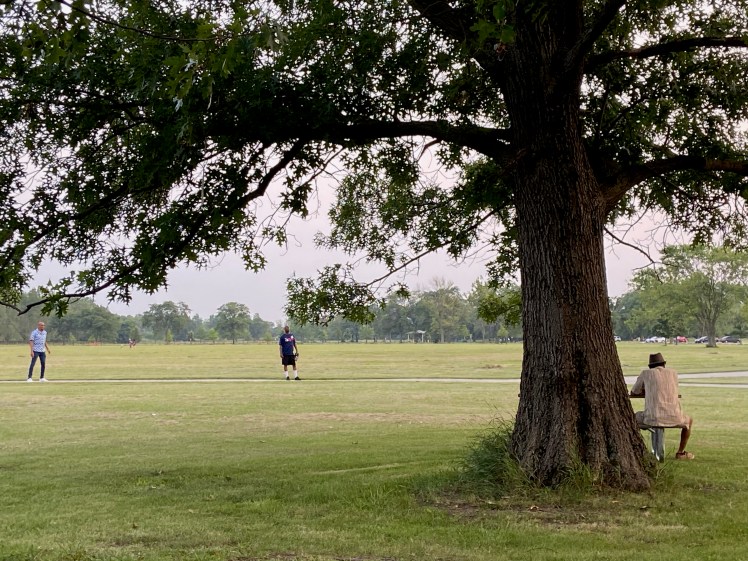
Embrace rest. Maybe you don’t want to do anything at all. Maybe staring at a tree, reading, walking without a destination, is what rest looks like for you. Do that. And do it even despite the guilt, until it starts to fall away. And it will. Because much of the guilt we feel is not real, it’s induced. Resting is not selfish. It is balance.

Honor all you’ve done, how loving you have been, how well you’ve cared for others and know that this very moment is for you. The past is gone. The future hasn’t happened. Right now is everything we have. Rest daughter, in this moment. You’ve done the work.

A note: Although I’m speaking specifically about eldest daughters, it is sometimes a younger daughter or only child who must take on the position of the eldest for various reasons. Sometimes, it may even be a younger male in the family who takes on the role of the eldest, although this is rare just because of the structure of most cultures and views of females. Either way, those placed in the role of eldest may hold a deep sense of care and responsibility for others and the outcome of circumstances. For all carrying this weight, I wish you rest and care.