How Have You Responded to, “What Are You?”
June 14, 2024

“What are you?” can be an innocent question. Or one with complexity behind it.
Have you ever been asked this? If so, what does this question mean to you? How have you responded?
“What are you?” can be an innocent question. Or one with complexity behind it.
Have you ever been asked this? If so, what does this question mean to you? How have you responded?

I am the Chai Alchemist. When I was a little girl, the thing that made me most proud was to make the perfect cup of chai. I’d heat up the water in a steel pot and throw in the gritty chai grounds. The two boiled almost to the rim of the pot before I’d add the milk and spices, cardamom, clove, sometimes turmeric and a little bit of ginger too. Maybe black pepper.
It started out as something I was taught to do. Someone came over, we served them chai. Usually at least snacks too, if it was a more impromptu visit and definitely a whole meal with sides for the sides if it was planned. But at the very least, our guests couldn’t leave without having a cup of chai.
I knew that if someone was coming over, I’d have to get in that kitchen and start up the pot. Funny how of all the things I was made to do, this was one of the rare things I intrinsically loved to do. It was one of those rare times when everyone left me to my alchemy and when no other responsibility override the making of chai. The ceremony of it was honored.
I liked how everything else stopped. Because often, nothing stopped. Everything went by with lightning speed. The talking, the yelling, the organizing, the cleaning, everyone in the house shifting around, all the time. No one knew what it meant to be still, to revel in the peace that silence offered.
But when guests came, my parents were anchored in sitting with them. It was nice to see them do nothing else but have conversation. It kept them from worrying, fussing, rushing, running.
Making chai anchored us.
We all need it, anchoring. We need to pause, to sit in silence, to reflect, to hear our precious breath. We all need some form of making chai. We are all chai alchemists.
 When people don’t know exactly how to hate, it almost appears feigned, as if they’re practicing being insulting and hurtful. There’s a fake barrier that feels somewhat protective because people appear so silly in their attacks. It’s almost poetic justice, their buffoonery.
It’s an awkward disrespect. But oh man, when they know exactly how they want to direct their behavior, it’s heinous and ugly. It’s premeditated, exact and very real.
Excerpt from Essays of Night and Daylight
Photo Credit: Unsplash
How we understand race or gender or other differences in others,
has a lot to do with recency effects.
We forget things,
especially things that don’t have much to do with us,
and even when forgetting is harmful to
The Others.
This is self-preservation.
Preservation of others then means stepping outside of forgetfulness.
Please remember.
I had every intention of doing what my parents said, generally speaking. Okay, some of the time. For instance, I wore heavy, blingy outfits to church even though I would’ve rather worn jeans and a t-shirt. Yet, I didn’t protest too much. And speaking of that particular church, I was never too excited about going there either. Don’t get me wrong, I love God. I’ve always prayed even about stupid little things, things that were questionable to pray about probably, but I did it anyway. It was just that there were so many customs attached to culture and religion and all. Despite all of the regulations however, I had big dreams of being a good little godly Indian girl, at least when I was younger.
Stop it. Stop humming REM. It’s not like that. I didn’t lose my religion or anything but let’s just say I modified a few things, especially relating to the traditional Indian rules thing.
For instance, one high priority rule Mom and Dad made crystal clear from a very early age was that there would absolutely never ever be any dating, shmating. By the way, the more insistent or agitated they were about something, the more they rhymed. I don’t know. So anyway, that was the first broken rule.
There was also that rule about going out with friends. I just simply couldn’t. I could only go out with Indian friends. No, actually, I could only go out with cousins. Luckily, they were Indian.
And of course, I couldn’t go to the movies, bovies. All movies were bad, well, except for Indian ones. They were 3 hour-long musical masterpieces filled with secret lovers rolling down hills and spinning a lot (while trying to pretend they didn’t have vertigo).
Which reminds me, this one time when I was about 12, my parents decided to take us kids to an American movie. We went, we stared at the board of movie titles for about 22 minutes, and because the movie, Jungle Fever must’ve had some type of ring to it, my parents chose that. I don’t reckon they were expecting that type of opening scene, with the moaning and the brown on white skin gyrating. But we stayed for the whole entire thing, eyes and ears covered for much of it, peeking through chubby adolescent fingers when able. I think my parents thought it would eventually get better. Didn’t happen.
There were other, more minor infractions like, “Don’t do the drugs.” And “Don’t drink the whiskey (why whiskey specifically? And does this mean beer, wine, gin, etcetera etcetera, are acceptable?).” And most frequently, “Don’t be a whore (also known as, don’t have the sex. Ever). But most importantly, “Don’t go to the parties,” which they thought were guaranteed to include all of the above in one big hedonistic wave.
So I stuck to some, not to others. The details aren’t important. But then, there was one of the longest running rules, which I was introduced to as a 4-year-old: Arranged marriage. This was one concept I couldn’t understand, not at 4, not at 12. And especially not at 18, because that’s when you came along.
Rules, bules.

As a psychologist, I routinely hear many damaging myths about what mental health is and how treatment works. Some hold these myths to be truth, which lead them to suffer alone through deteriorating mental health.
Whether it’s due to everyday life stressors, relationship difficulties, the realities of racism, genetics, or all of the above, mental illness is real. And it requires real conversations to uncover myths and lead people who are suffering to find needed treatment.
“I’m weak.”
Mental illness is not a weakness in character. It’s not a reflection of some invisible strength monitor. We all experience a spectrum of emotions, everything from feeling highly emotional about difficult life events, to feeling numb. It might be because of an accumulation of circumstances we’ve experienced in the past, our biological make up or both. It is in fact a show of strength to express your emotions and seek treatment.
“I’m crazy. Something’s wrong with me.”
1 in 5 adults have had a mental health diagnosis (NAMI), and the percentage is likely higher due to people’s fears of sharing their mental health concerns. So it’s the folks who say they’re perfect who have the real problem. Life is hard and we’re human, therefore we react.
“Other people don’t feel like this.”
And how would you know this? We really have no real idea of how other people react. Even the people we’re closest with don’t know how we’re really feeling unless we tell them. So how do we know how others really react to different situations? And how does it help us to compare? And why, especially, do we assume that everyone would react the same way? We’re far too different to behave or feel the same in every situation.
“I have to hide my mental illness.”
Of course, this is your decision. Although if you decide to share with someone you trust, you may find that more people can relate with you than you thought. They or someone they know may suffer from mental illness. Some people may even be supportive and be able to give you some guidance. The reality is, there are people who don’t understand and people who do. It’s important to figure out who your trusted loved ones are.
“Medication will turn me into a zombie.”
All medications have side effects. Everyone reacts differently to each medicine based on body chemistry. Some medications cause some uncomfortable side effects when you first start taking them. The biggest question to ask yourself and your doctor is whether the benefits outweigh the side effects.
“I don’t have enough faith in God. I just need to pray more.”
I know spiritual leaders who suffer from anxiety, depression and other mental health difficulties. Does it mean they don’t have enough faith? Prayer can be powerful, however, have you been able to pray away all of the problems in your life? Do you pray rather than seek medical attention for a physical condition?
“Counseling is for white people.”
So only white people have problems? People of color tend to have a unique dynamic of stress specifically related to being people of color. Discrimination is real, people hold strange stereotypes about those who look different from them and people of color are sometimes even victims of hate. Have you ever wondered if you didn’t get a job or a promotion because of your ethnicity? Chronic worries such as these accumulate and the build up can be tremendously stressful.
“My family will be upset if they know I’m sharing our private business.”
Every family has its family business. What you’re sharing isn’t that. What you’re sharing is your business. You’re talking about how life affects you.
“It’s selfish to take care of myself.”
This is a cultural lie in much of the world, especially amongst girls and women. Your creator sees you as a jewel. You deserve to care for yourself and express your desire to have loved ones care for you as well. Also, we can’t help anyone if we’re sick.
“I don’t want to express myself in front of others.”
Everything we do is an opportunity to model behavior to others, especially those we care about the most. Wouldn’t it be wonderful to teach our children or partner that emotional expression is healthy?
“My job will find out I’m talking to a therapist.”
Does your employer know you went to the dentist last month or that you just got a refill for blood pressure medication? Therapy is highly confidential and there are very few reasons this information would need to be revealed. The first couple of sessions of treatment are usually spent reviewing how confidentiality works so that you’re very clear on how it all works.
“Asking people if they are thinking about suicide will cause them to feel suicidal.”
Simply asking this question does not cause someone to become suicidal. Either the intention is already there or it isn’t. In fact, asking about it may open up conversation and potentially save someone’s life. The National Suicide Prevention is a 24-hour hotline for anyone who needs to talk: 800-273-8255.
We can end the stigma of mental illness together. Please reach out to me if with questions or would like me to speak about mental health in your community.
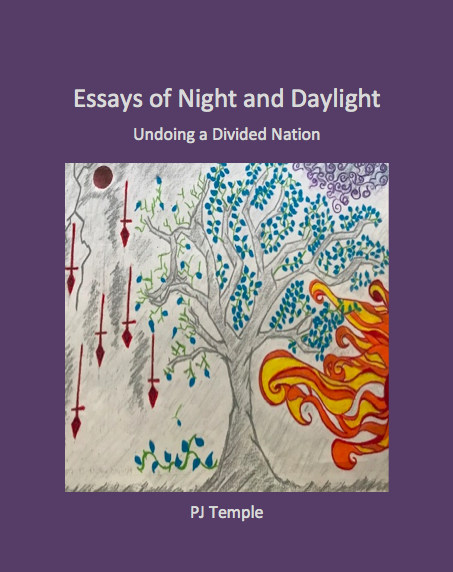
One of the most powerful ways we can undo injustice is by sharing our stories. I share some of my stories of race, immigration and perceptions of American life through the lens of a woman of color in Essays of Night and Daylight.
Something important changes as we hear others’ stories. We hear threads of similarity. We hear joy, pain, struggle and strength. We hear ourselves.
 Essays of Night and Daylight
Perspective on race, immigration and American life through the lens of a woman of color.
$5.00
Purchase here:

Thank you for reading!
 A mother talks about the dread she felt while hoping to hear that her missing daughter was alive. In another account, a mother shares her disgust at seeing nude pictures of her underage daughter on the Internet and pleading with those who published it to take it down. I am Jane Doe (2017) is a documentary that exposes how rampant sex trade crimes are in the United States. It also brings to light that many people in power are aware of it but look the other way because they have a hand in this lucrative “business.” In I am Jane Doe, parents, attorneys and other advocates fight a financially thriving web-based company to try to stop print and online advertising of underaged children for prostitution.
There is an elaborate worldwide system in which people have one goal – to move children and young people around like cargo in order to sell them into prostitution. Children are kidnapped and become yet another name on a missing persons list. Once they are taken and transported far from everything they know, they’re threatened to keep their mouths shut, or else. And yes, this problem is happening in developed countries as well, all the time, which is why it’s important for us to stay informed.
In the book, The White Umbrella: Walking with Survivors of Sex Trafficking, Mary Frances Bowley informs readers about the lives of young people who have been trafficked and ways they can be supported. She has also created The White Umbrella Campaign to support those who have been trafficked throughout the United States.
Although it’s an intricate operation happening under high secrecy, sex trafficking is happening all around us. A survivor of sex trafficking could be anyone around us, quietly seeking help, reaching out in ways we may not understand right away. The more we know, the more we can help.
I’m excited to share the cover of my upcoming book, Essays of Night and Daylight, which includes stories on race, immigration and perceptions of American life through the lens of people of color.