Is It Duty or Trauma In The Making

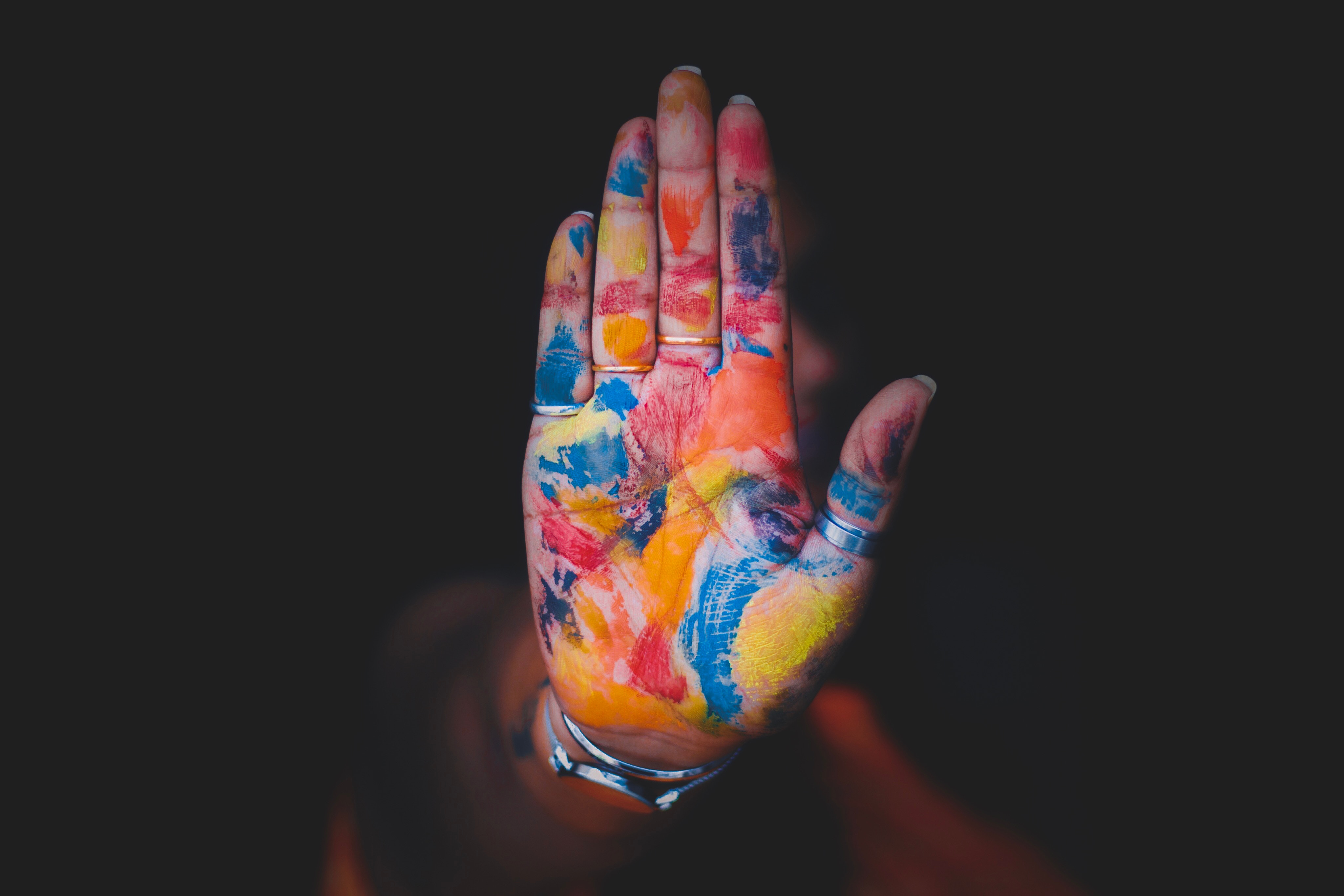
Photo by Anna Shvets on Pexels.com

Rules do not always mean safety. In fact, they can cause the very harm we’re trying to prevent. To be told to be dutiful provides boundaries, but do they exist to keep us safe or to lock us in and be more vulnerable to danger? Duty is a heavy word, sometimes a powerful thing that fills our hearts with honor and reinforces a sense of community. It is a parent’s duty to care for their child. Yet, this same word can then be used to imprison a woman to fulfill her wifely duties.

When raised in duty, it is difficult to know if it is the elixir or the poison. People just automatically follow what they’re taught. But somewhere along the way, there’s a separation between what we’re told and what we want. When these two are misaligned but we’re forced to comply, duty is becoming something unhealthy. It’s important to know the difference. Otherwise, we can be pushed into doing things we may not feel are the best for us. We can integrate this forced way of seeing the world and then require that others comply with these same controlling views.

You might sometimes wonder how whole groups of people agree with some scary notion of how things should be. A classic example is Margaret Atwood’s book, The Handmaid’s Tale. A society of people thought that controlling girls and women should become the norm. This society believed that it is a higher power’s will for females to be stripped of power and be used for whatever their delusions thought necessary.

This is why we must stay vigilant in understanding the difference between duty and trauma. The definition of a word, a concept, a law, how a human being is labeled, should not be taken lightly. Protection of self means protection of others.

The Plight and Beauty of the Eldest Daughter

If you’re the eldest daughter, you are likely the keeper of the family. It’s an important role, I suppose. It’s also a very exhausting role. Not only are you seen as the confident, capable, responsible one, but you own it. You own all of it, the title, the diligence, the hyper-vigilance, and the silent heaviness intrinsically tied to it.

I commented on Eldest Daughter Syndrome in Newsweek magazine, and the many ways it can have us feeling like a walking contradiction. We are expected to protect younger siblings, the home, family reputation and sometimes our parents, even from each other. We are to do it with grace, a smile and look radiant all the while. The charge is grand, grandiose really. But we do it because it is all we’ve ever known.

Despite the burden, there is a beauty that comes along with being the eldest. First born children are often conscientious and driven to excel in school, career and relationships. They are solution-based and diligent. We dive into high stress situations and figure out how to resolve them. We get shit done.

The tragedy is that we feel a sense of restlessness and angst even when there is nothing to do, nothing to fix, nothing to complete. Yet, when we aren’t doing things, we ourselves may feel incomplete. We create tasks to work on, to finish, to produce. The doing feels perpetual.

Rest is a luxury, we tell ourselves. Mindfulness is a mirage. But these ideas are false. They were taught early and as a part of a larger system where girls and women must care for and nurture others. We are told it is our identity.

Yet, we can preserve the beauty of this role and embrace the ways it has strengthened us. To do so, we must leave the toxicity behind. It’s not a simple thing when how we perform seems to be intrinsically connected to who we are. But so many things are paradoxically connected. Our true work now is to pull it apart. And this is how we begin.

Permission is powerful. Allow yourself to shift away from unhealthy learned messages, even if uncomfortable at first. Guilt and shame may rise just as you try to push back against long-reinforced ideas, but that doesn’t mean these feelings are accurate. Remain curious about why you feel what you feel, and whether those are learned ways to feel or whether they’re valid.

Increase in your sense of presence. Move with mindfulness to connect with what you truly desire out of a situation, relationship or interest. In each moment, ask yourself if it is bringing you joy, not whether it’s what others expect of you.

Separate what needs to get done versus what you’d like to do. Often eldest daughters have had to handle talks out of necessity but less often are asked what we want. Ask yourself what you’d like to do rather than what you have to do. The have to’s aren’t going anywhere. Fiercely make space for what you want.

Embrace rest. Maybe you don’t want to do anything at all. Maybe staring at a tree, reading, walking without a destination, is what rest looks like for you. Do that. And do it even despite the guilt, until it starts to fall away. And it will. Because much of the guilt we feel is not real, it’s induced. Resting is not selfish. It is balance.

Honor all you’ve done, how loving you have been, how well you’ve cared for others and know that this very moment is for you. The past is gone. The future hasn’t happened. Right now is everything we have. Rest daughter, in this moment. You’ve done the work.

A note: Although I’m speaking specifically about eldest daughters, it is sometimes a younger daughter or only child who must take on the position of the eldest for various reasons. Sometimes, it may even be a younger male in the family who takes on the role of the eldest, although this is rare just because of the structure of most cultures and views of females. Either way, those placed in the role of eldest may hold a deep sense of care and responsibility for others and the outcome of circumstances. For all carrying this weight, I wish you rest and care.


The Unseen Stings Most

I don’t have to be called a name to feel the sting of hate. It’s in the flow of society. It’s how I feel moving through a space. Space, without gravity. No foothold or anything else to anchor onto. Just the knowing.

Because it’s in the air. I, we, breathe it.

There are more often no names or obvious gestures of being discarded. I hate that way I feel, so unsettled without a way to touch or point at it. That’s it, don’t you see? I scream in my mind, wanting to yell to bystanders who aren’t innocent in their denial. They scoff with, “Oh, you’re just being,” or “Oh, everything’s not about that.” For some, it is though. So then the translucence of it is what makes me then question it. Question myself rather.

And then I pull myself back, toes touching ground, heart reconnecting with soul. This soul that allows intuition to reverberate back into my body, confirming what is real, believing it, if only within myself. To know, to realize this, is what I need to remain grounded, to remain safe, mind and body. 

Racial Slurs for the Ambiguously Ethnic

aashish-r-gautam-340139When people don’t know exactly how to hate, it almost appears feigned, as if they’re practicing being insulting and hurtful. There’s a fake barrier that feels somewhat protective because people appear so silly in their attacks. It’s almost poetic justice, their buffoonery.
It’s an awkward disrespect. But oh man, when they know exactly how they want to direct their behavior, it’s heinous and ugly. It’s premeditated, exact and very real.

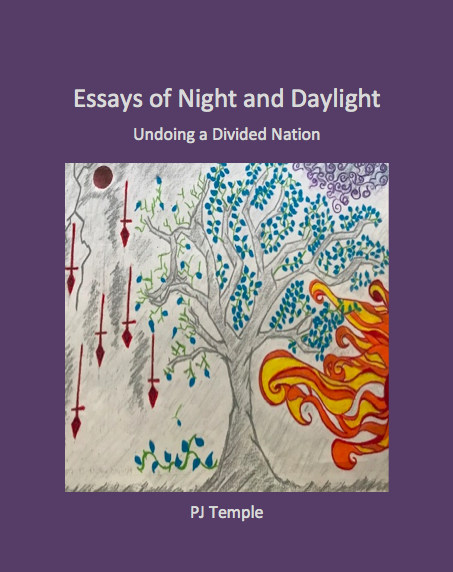
Excerpt from Essays of Night and Daylight


Photo Credit: Unsplash

What’s Your Story?

Screen Shot 2018-06-02 at 1.33.51 AM

One of the most powerful ways we can undo injustice is by sharing our stories. I share some of my stories of race, immigration and perceptions of American life through the lens of a woman of color in Essays of Night and Daylight.

Something important changes as we hear others’ stories. We hear threads of similarity. We hear joy, pain, struggle and strength. We hear ourselves.


Screen Shot 2018-06-02 at 1.33.51 AMEssays of Night and Daylight
Perspective on race, immigration and American life through the lens of a woman of color.
$5.00


Purchase here:
Buy Now

Thank you for reading!

How Do We See “Those People Over There?”

IMG_3296How do we care for ourselves even when we feel like dominoes are collapsing all around us? How do we ground ourselves in unfamiliar interactions so that we are having meaningful conversations rather than inciting pain?
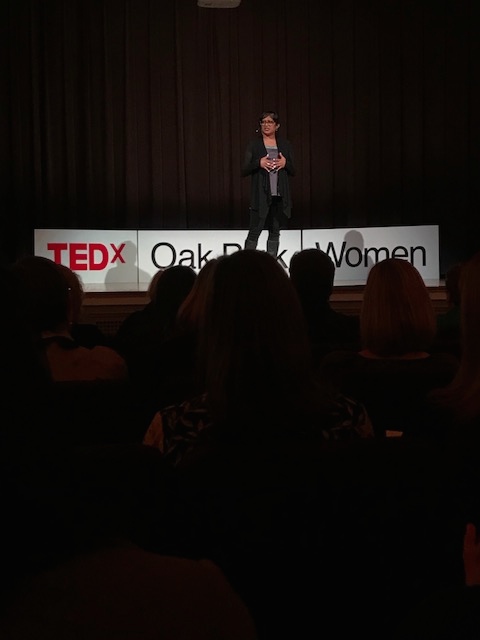

I reflected on these ideas in a recent TEDx talk on widening our view of humanity, especially with those who may be unlike us. In cultivating my ideas, I took a closer look at the nature of humanity and the divisions we so easily make, sometimes void of reflection, love or kindness. How powerful it would be if we instead attempted to unite with those who are very different from us at first glance?

It was frustrating however, that even as I was preparing to speak on how to have conversations that push us forward, I felt my own painful experiences coming to the surface. I was challenged by the mandate to walk in love and listen intently, while also wanting to fight with angry words, hoping to force people to reverse the hate in their hearts.

And at other times, I was staring at the ugly biases insidiously rising within me. No one is immune to these complexities, no matter how aware we think we are or how deeply we contemplate these things.

I was challenged to see what lies beneath division, to find that we have simplistic, dichotomous ways in which we choose who we love and who we choose to despise.
We quickly paint pictures of unfamiliar people as others, and as the dreaded and misunderstood them over there. And the others are sometimes depicted as less than, undeserving of respect, and in the most heinous circles, even unworthy of living.

This process doesn’t surface overnight. The need to hastily throw people into categories is insidious. It is nurtured in fear, isolation and ignorance over the course of time. And yet again, no one is immune. The sweetest little church lady may harbor hate toward someone who is unlike her. She’d probably call it something different, maybe labeling it as protecting herself, even though there’s nothing to be afraid of.

Fear is powerful and vile, if fed over time. It can become one’s demise if overtaken by it, both mentally and physically.

Harboring fear that transforms into anger, resentment and hate can annihilate us. We mustn’t weaponize fear the way some do.
Then, in order to care for society in all of its complexity and beauty, we must listen intently to what others are saying. And in doing this, we also care well for ourselves, because after all, we are all others and so we are all one.

IMG_8137.jpg

Hear the talk: Confidently Changing the Narrative of Inequity.

What Sharing Privilege Looks Like

e42aeff9ec4e61068ad6670bd75f5ab9

A teenage girl came in for psychological services. Like most young people, she was guarded at first but eventually began talking about a difficult past riddled with cruelty followed by abandonment. She cried at times, ensuring to avert eye contact. Teenagers are so hard to reach, I was glad she felt she could share. We laughed together a little near the end of the session, often a relieving sign of a glimmer of hope. But even still, there was something unsettling about her.

She missed her follow-up appointment. I hoped she would return soon. The heaviness she carried shouldn’t have to be contained in such a young life. As weeks passed, I continued to wonder how she was doing and whether anyone was helping her hold her pain, and whether someone, just even one person, told her she was loved.

Then one day, just like that, she was back. As I was scanning the waiting area to check on another client’s arrival, I saw the girl sitting with shoulders hunched and staring into her hands. After wrapping up some paperwork, I headed over to the waiting area to call her in.

But before I could open the door, my colleague, Julia stopped me. “I’m sorry, the client said she didn’t want to see the ‘dark one.'” I’m so sorry that some people are that ignorant.” I wasn’t naive. I was working in the hometown of a former grand dragon of the KKK, but it did feel a little like I was kicked in the stomach.

As I was walking through the waiting area a while later, I saw the young lady standing at the receptionist desk with an older man. He glanced my way and immediately began throwing daggers at me with his eyes, as though he was an automated cyborg ordered to do so. As the girl noticed this silent interaction, she began to mimic him.

But her gaze was unlike his piercing and defiant stare. Hers was filled with deep emptiness. I walked away wondering if she even knew why she thought she loathed me. The lines between sadness and anger, fear and hate are so very thin.

I almost felt defeated. She was too young to despise anyone, but I suppose she was also too impressionable not to. She was vulnerable in many ways, one of those being that she didn’t yet have her own sense of self-worth, so how could she accept anyone else? I say I almost felt defeated because seeing Julia knew exactly what to say, exactly what I needed to hear, was the buffer. It was the hope that one day more people will be reasonable, less intolerant. She validated my disappointment that it’s a tragedy to feel this girl is unreachable right now,  she acknowledged that this was a case of hate having had won.

That one statement was a million consoling words for me. Julia could have said, “Oh, that’s just how it is around here,” or “She’s young,” or “She didn’t mean it that way.” But instead, she called it out for the vile thing it was. Hate begets hate.

And what hurt most was that the girl was somewhere around 15 years old. She wasn’t 70 and stuck in a different era, still calling people of color negroes or coloreds like some of my patients had. This was taught to her, passed down from those 70 year olds, and onto those 40 year olds, and now onto her impressionable young mind, once pure, as God created it. Through generations, she was given the gift of hate.

Although it was disappointing, it was a little easier to face knowing Julia was aligned with me. She was aligned despite it not happening to her, despite having no direct impact from it, despite her being white and being completely unaffected, if she chose to see it that way. But she chose otherwise. She didn’t have to sacrifice anything to align with me. She didn’t have to move aside and relinquish her privilege. She was simply human in all its beauty –  willing to hold my disappointment with me.

And this is what sharing privilege looks like.

What Are You?

IMG_5718“What are you?” people sometimes ask. It seems to come from a place of perplexity. There appears to be frustration because when someone’s ethnicity isn’t identifiable, the ability to categorize is suspended.

When people ask with malicious intent, they don’t know exactly how to mistreat those of us who appear more racially ambiguous. Their slurs appear feigned as if they’re practicing being insulting and hurtful. There’s a fake barrier that feels almost protective because they seem silly in their attacks. It’s poetic justice, their buffoonery.

But oh man, when people know exactly how they want to direct their behavior, they’re heinous and ugly. It’s premeditated, exact and ironically sincere. And that’s the purpose the question serves for them. They’re asking, What are you so that I can hate you with a special type of ignorance.

The are is sometimes drawn out and accompanied by a sneer. It’s an inability to judge. Maybe they wish they could call me the N word, or maybe confidently accuse me of being an illegal “alien,” or Muslim, although, if not so ignorant, they’d know that the latter isn’t even an ethnicity.

Yes, it’s happened to me before, on multiple occasions and in various forms. Sometimes it’s blatant, most times covert. On business trips, my white colleague and I were consistently pulled out of the airport security line to be frisked and have the contents of our luggage overturned. “This only happens when I’m with you,” she’d marvel, and we’d shake our heads.

Most often though the high-pitched, “What are you” with furrowed brows and head cocked to one side is asked by well-meaning people who are simply curious. And when I tell them, they usually respond with an, “Oh! I love Indian food” or “Have you seen Lion?” and we dive into intriguing conversations about what we are, far beyond our race. And that’s beautiful because it comes from our ability to wonder and connect.

So what am I? What are any of us? Well, we’re people and being human intrinsically means we’re knitted in many fascinating, complex ways based on how we’re created and the lives we’ve lived. So go ahead, I see the crease in your brows. Ask me what I am.

We are Conquistadors!


IMG_4513

I did it! Actually, we did it. There could be no other way. You, my dear, were the reason they were finally willing to understand the world as it should be seen.

When my parents came to America, they brought with them a few belongings, some big dreams and a host of misconceptions about what the people of America were like. In fact, they seemed to understand all non-Indians in a grossly inaccurate, almost caricaturistic light. It wasn’t malicious, it was simply their perspective.

In fact ironically, when I think of their perceptions, they parallel to Americans’ views of Apu from The Simpsons. He’s a clownish little Indian man with a heavy accent and unethical business practices. In the same vein, my parents saw all Americans as sex crazed hippies with no concept of collectivism, family, sacrifice or desire to maintain an untainted reputation, regardless of the costs.

It makes some sense. They would be encountering so many people unlike themselves, they had to create a sort of blueprint for understanding the many puzzle pieces that made up America. This can be useful to a degree I suppose, but it was also quite harmful. It drew lines between the perceived stark differences separating Indians and “the others.”

My parents were unable to relinquish how their custom-laden world could even vaguely line up with any strand of American culture. And further, meshing even slightly with “bad, loose, selfish” America would be treason of Indian culture.

Had my parents considered though that their children were born into this sin and may one day adopt some of these dreaded qualities? Well, no. Not for a long, long time, not until they had to face you, my very un-Indian boyfriend. Until then, they held on tight to their misinformed notions, which sometimes unwittingly teetered on the brink of intolerance.

And so when you came along, the concept of us was incomprehensible to them, a paradox. But slowly they began to bend. The change was so subtle that it almost went undetected. It was in the small interactions – silence replaced by laughter, formalities replaced by meaningful exchanges – that they were being redefined. They needed you, they needed light. They needed exposure and reflection of their own vulnerabilities.

We did this! We pushed them out of their uncomfortable places. We showed them something they had never dreamt of. We, my love, are conquistadors!