What Are You?

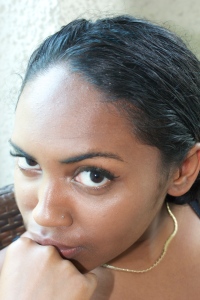
IMG_5718“What are you?” people sometimes ask. It seems to come from a place of perplexity. There appears to be frustration because when someone’s ethnicity isn’t identifiable, the ability to categorize is suspended.

When people ask with malicious intent, they don’t know exactly how to mistreat those of us who appear more racially ambiguous. Their slurs appear feigned as if they’re practicing being insulting and hurtful. There’s a fake barrier that feels almost protective because they seem silly in their attacks. It’s poetic justice, their buffoonery.

But oh man, when people know exactly how they want to direct their behavior, they’re heinous and ugly. It’s premeditated, exact and ironically sincere. And that’s the purpose the question serves for them. They’re asking, What are you so that I can hate you with a special type of ignorance.

The are is sometimes drawn out and accompanied by a sneer. It’s an inability to judge. Maybe they wish they could call me the N word, or maybe confidently accuse me of being an illegal “alien,” or Muslim, although, if not so ignorant, they’d know that the latter isn’t even an ethnicity.

Yes, it’s happened to me before, on multiple occasions and in various forms. Sometimes it’s blatant, most times covert. On business trips, my white colleague and I were consistently pulled out of the airport security line to be frisked and have the contents of our luggage overturned. “This only happens when I’m with you,” she’d marvel, and we’d shake our heads.

Most often though the high-pitched, “What are you” with furrowed brows and head cocked to one side is asked by well-meaning people who are simply curious. And when I tell them, they usually respond with an, “Oh! I love Indian food” or “Have you seen Lion?” and we dive into intriguing conversations about what we are, far beyond our race. And that’s beautiful because it comes from our ability to wonder and connect.

So what am I? What are any of us? Well, we’re people and being human intrinsically means we’re knitted in many fascinating, complex ways based on how we’re created and the lives we’ve lived. So go ahead, I see the crease in your brows. Ask me what I am.

“Oh! That’s Why You’re so Down.”

I think people really believe it’s a compliment when they say it. When they find out my husband is black, they screech with excitement, “Oh, thattttt’s why!” like they’ve been playing a secret guessing game and nobody told me because I’m the subject of the conundrum.

Excuse me. I wonder, “That’s why” what? Well, lots of presumptuous things, according to some. They go on to explain freely, without my prompt:

That’s why you “Talk American,” or “Don’t have an Indian accent,” or “Have that accent,” or “Dress like that,” or “Aren’t like those other Indians” or “That’s why you’re so down.”

Or this, which happens every time my own friend introduces me to someone new: “Hey guys, this is my Indian friend, Patty. She’s Indian, but she’s really Black. Cuz she’s cool.” Ouch. Cool does not equal Indian, apparently. I love this particular friend and I know she means no harm and most importantly, totally misses the underhanded comment. So, I quietly forgive her. Every damn time. I forgive her also because of the dumb stereotypes portrayed  in the media of the stiff, Indian doctor with no bedside manner, droning voice and serious personality deficit. Or the heavily accented convenient store cashier who also lacks personality and wears a name tag with some version of Abu or Apu or last name default, Shah, Patel or Ali. Customers cringe as they try to get through a simple transaction of buying cigarettes because the guy’s accent is as thick as cement.

Ultimately, I know it’s not because of ill feelings or the intent to insult or belittle. It’s just that people simply don’t think of Indian-American me when they look at me, they (in their minds) see Indian, dot wearing, blingy sheet wrapped, molasses accented, curry smelling, personality-lacking, good at math, bobblehead-movement-having, Indian me. I’m none of these (well, except for the bobblehead thing, when feeling particularly passionate about something).

People are accustomed to making rash estimations of who a person is. We make crazy ignorant assumptions in a matter of seconds. There’s a reason for this. Survival. The part of the brain called the limbic system wants to know whether someone is a threat, a friend, foe, neutral, same or different. It’s the same reason women quickly assume an unfamiliar man is a potential danger. And when the limbic system is trained by ignorance, it’s the reason people clutch their purses when they see a Black man walking towards them. It’s the reason a person is convinced her attacker was some shade of brown. It’s the reason a woman on an airplane thinks the person in the seat next to her intently solving math problems is a terrorist making plans to blow something up (even though he’s a well-respected Italian economist). The limbic system isn’t racist. A frightened society is. The limbic system isn’t biased. People are.

Thus, in some folks’ perspectives, I’m down not because I was born in Chicago and grew up among Puerto Rican, Mexican, Italian, Cuban, Black, White, Indian and other ethnicities. It can’t be because I have friends from many walks of life, like those who were once homeless to friends who have some really phat summer homes. It’s because my husband is Black. I’m reduced to my affiliation with the person I married.

It’s cool though (my Black husband didn’t teach me to say that, by the way). I know most people don’t mean to make ridiculous generalizations. They’re fascinated by oddities like not marrying someone from the same race or people whose impeccable American accents don’t match their brown skin. And that’s why I’m teaching. Hopefully people are learning that individuals are just that, individual, dynamic and not reduced to how they look or who they love.