The Unseen Stings Most

I don’t have to be called a name to feel the sting of hate. It’s in the flow of society. It’s how I feel moving through a space. Space, without gravity. No foothold or anything else to anchor onto. Just the knowing.

Because it’s in the air. I, we, breathe it.

There are more often no names or obvious gestures of being discarded. I hate that way I feel, so unsettled without a way to touch or point at it. That’s it, don’t you see? I scream in my mind, wanting to yell to bystanders who aren’t innocent in their denial. They scoff with, “Oh, you’re just being,” or “Oh, everything’s not about that.” For some, it is though. So then the translucence of it is what makes me then question it. Question myself rather.

And then I pull myself back, toes touching ground, heart reconnecting with soul. This soul that allows intuition to reverberate back into my body, confirming what is real, believing it, if only within myself. To know, to realize this, is what I need to remain grounded, to remain safe, mind and body. 

Racial Slurs for the Ambiguously Ethnic

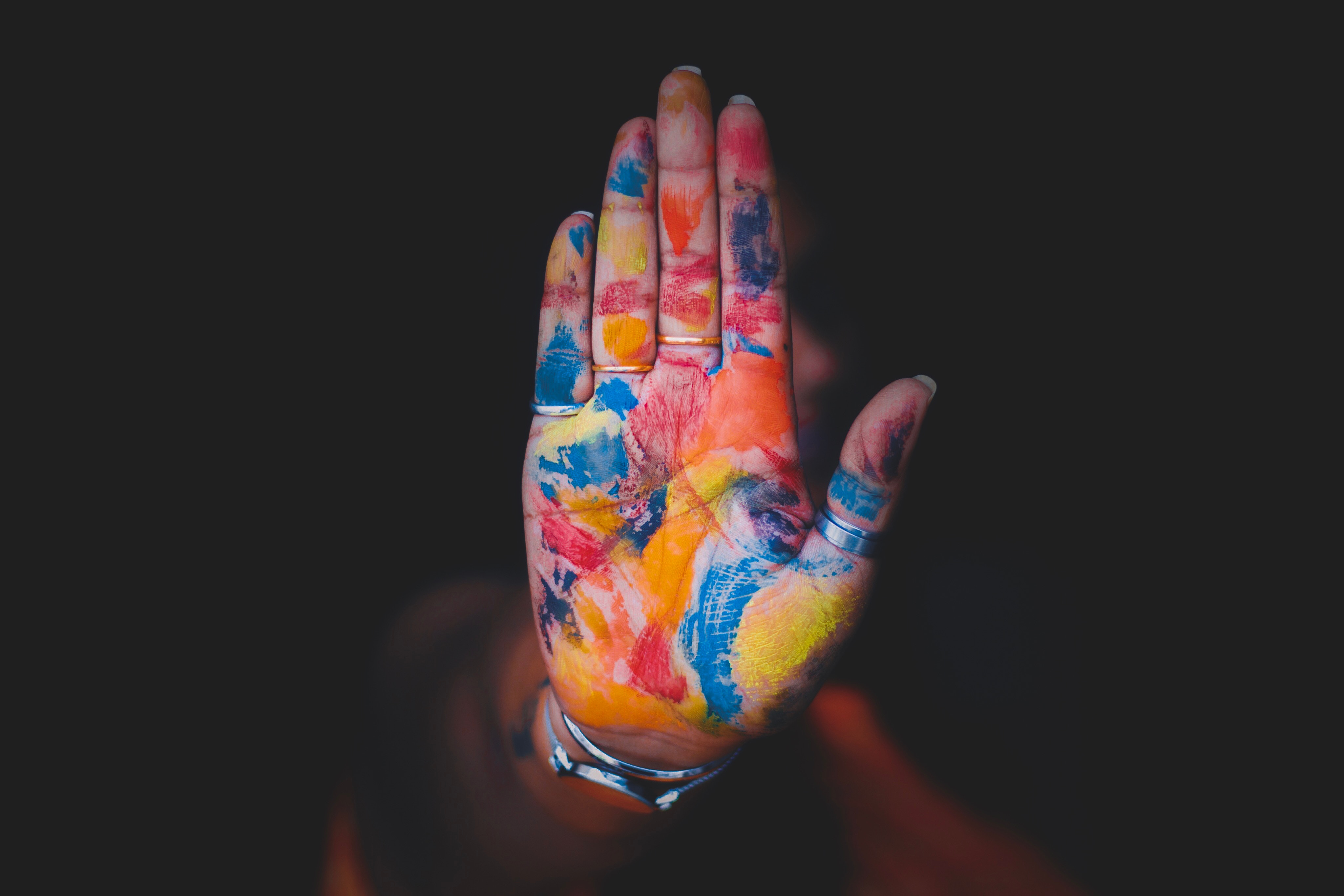
aashish-r-gautam-340139When people don’t know exactly how to hate, it almost appears feigned, as if they’re practicing being insulting and hurtful. There’s a fake barrier that feels somewhat protective because people appear so silly in their attacks. It’s almost poetic justice, their buffoonery.

It’s an awkward disrespect. But oh man, when they know exactly how they want to direct their behavior, it’s heinous and ugly. It’s premeditated, exact and very real.

Excerpt from Essays of Night and Daylight


Photo Credit: Unsplash

What’s Your Story?

Screen Shot 2018-06-02 at 1.33.51 AM

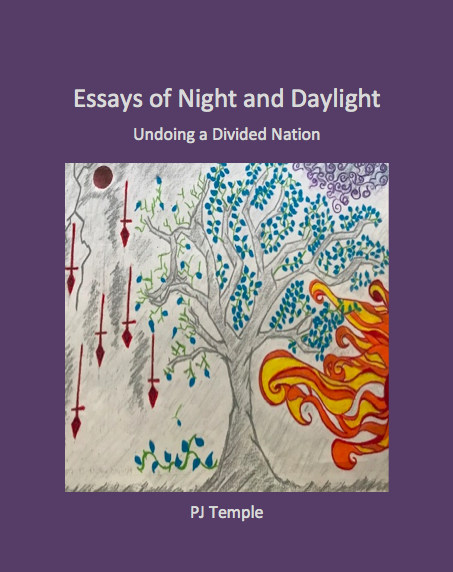
One of the most powerful ways we can undo injustice is by sharing our stories. I share some of my stories of race, immigration and perceptions of American life through the lens of a woman of color in Essays of Night and Daylight.

Something important changes as we hear others’ stories. We hear threads of similarity. We hear joy, pain, struggle and strength. We hear ourselves.


Screen Shot 2018-06-02 at 1.33.51 AMEssays of Night and Daylight
Perspective on race, immigration and American life through the lens of a woman of color.
$5.00


Purchase here:
Buy Now

Thank you for reading!

Keep Discussions about Social Justice Moving Forward

IMG_7996 - Version 2.JPG

Subscribe to my newsletter for updates and discussions on social justice.


Subscribe for updates:

Go back

Your message has been sent

Warning
Warning
Warning
Warning

Warning.


What Sharing Privilege Looks Like

e42aeff9ec4e61068ad6670bd75f5ab9

A teenage girl came in for psychological services. Like most young people, she was guarded at first but eventually began talking about a difficult past riddled with cruelty followed by abandonment. She cried at times, ensuring to avert eye contact. Teenagers are so hard to reach, I was glad she felt she could share. We laughed together a little near the end of the session, often a relieving sign of a glimmer of hope. But even still, there was something unsettling about her.

She missed her follow-up appointment. I hoped she would return soon. The heaviness she carried shouldn’t have to be contained in such a young life. As weeks passed, I continued to wonder how she was doing and whether anyone was helping her hold her pain, and whether someone, just even one person, told her she was loved.

Then one day, just like that, she was back. As I was scanning the waiting area to check on another client’s arrival, I saw the girl sitting with shoulders hunched and staring into her hands. After wrapping up some paperwork, I headed over to the waiting area to call her in.

But before I could open the door, my colleague, Julia stopped me. “I’m sorry, the client said she didn’t want to see the ‘dark one.'” I’m so sorry that some people are that ignorant.” I wasn’t naive. I was working in the hometown of a former grand dragon of the KKK, but it did feel a little like I was kicked in the stomach.

As I was walking through the waiting area a while later, I saw the young lady standing at the receptionist desk with an older man. He glanced my way and immediately began throwing daggers at me with his eyes, as though he was an automated cyborg ordered to do so. As the girl noticed this silent interaction, she began to mimic him.

But her gaze was unlike his piercing and defiant stare. Hers was filled with deep emptiness. I walked away wondering if she even knew why she thought she loathed me. The lines between sadness and anger, fear and hate are so very thin.

I almost felt defeated. She was too young to despise anyone, but I suppose she was also too impressionable not to. She was vulnerable in many ways, one of those being that she didn’t yet have her own sense of self-worth, so how could she accept anyone else? I say I almost felt defeated because seeing Julia knew exactly what to say, exactly what I needed to hear, was the buffer. It was the hope that one day more people will be reasonable, less intolerant. She validated my disappointment that it’s a tragedy to feel this girl is unreachable right now,  she acknowledged that this was a case of hate having had won.

That one statement was a million consoling words for me. Julia could have said, “Oh, that’s just how it is around here,” or “She’s young,” or “She didn’t mean it that way.” But instead, she called it out for the vile thing it was. Hate begets hate.

And what hurt most was that the girl was somewhere around 15 years old. She wasn’t 70 and stuck in a different era, still calling people of color negroes or coloreds like some of my patients had. This was taught to her, passed down from those 70 year olds, and onto those 40 year olds, and now onto her impressionable young mind, once pure, as God created it. Through generations, she was given the gift of hate.

Although it was disappointing, it was a little easier to face knowing Julia was aligned with me. She was aligned despite it not happening to her, despite having no direct impact from it, despite her being white and being completely unaffected, if she chose to see it that way. But she chose otherwise. She didn’t have to sacrifice anything to align with me. She didn’t have to move aside and relinquish her privilege. She was simply human in all its beauty –  willing to hold my disappointment with me.

And this is what sharing privilege looks like.

What Are You?

IMG_5718“What are you?” people sometimes ask. It seems to come from a place of perplexity. There appears to be frustration because when someone’s ethnicity isn’t identifiable, the ability to categorize is suspended.

When people ask with malicious intent, they don’t know exactly how to mistreat those of us who appear more racially ambiguous. Their slurs appear feigned as if they’re practicing being insulting and hurtful. There’s a fake barrier that feels almost protective because they seem silly in their attacks. It’s poetic justice, their buffoonery.

But oh man, when people know exactly how they want to direct their behavior, they’re heinous and ugly. It’s premeditated, exact and ironically sincere. And that’s the purpose the question serves for them. They’re asking, What are you so that I can hate you with a special type of ignorance.

The are is sometimes drawn out and accompanied by a sneer. It’s an inability to judge. Maybe they wish they could call me the N word, or maybe confidently accuse me of being an illegal “alien,” or Muslim, although, if not so ignorant, they’d know that the latter isn’t even an ethnicity.

Yes, it’s happened to me before, on multiple occasions and in various forms. Sometimes it’s blatant, most times covert. On business trips, my white colleague and I were consistently pulled out of the airport security line to be frisked and have the contents of our luggage overturned. “This only happens when I’m with you,” she’d marvel, and we’d shake our heads.

Most often though the high-pitched, “What are you” with furrowed brows and head cocked to one side is asked by well-meaning people who are simply curious. And when I tell them, they usually respond with an, “Oh! I love Indian food” or “Have you seen Lion?” and we dive into intriguing conversations about what we are, far beyond our race. And that’s beautiful because it comes from our ability to wonder and connect.

So what am I? What are any of us? Well, we’re people and being human intrinsically means we’re knitted in many fascinating, complex ways based on how we’re created and the lives we’ve lived. So go ahead, I see the crease in your brows. Ask me what I am.

We are Conquistadors!


IMG_4513

I did it! Actually, we did it. There could be no other way. You, my dear, were the reason they were finally willing to understand the world as it should be seen.

When my parents came to America, they brought with them a few belongings, some big dreams and a host of misconceptions about what the people of America were like. In fact, they seemed to understand all non-Indians in a grossly inaccurate, almost caricaturistic light. It wasn’t malicious, it was simply their perspective.

In fact ironically, when I think of their perceptions, they parallel to Americans’ views of Apu from The Simpsons. He’s a clownish little Indian man with a heavy accent and unethical business practices. In the same vein, my parents saw all Americans as sex crazed hippies with no concept of collectivism, family, sacrifice or desire to maintain an untainted reputation, regardless of the costs.

It makes some sense. They would be encountering so many people unlike themselves, they had to create a sort of blueprint for understanding the many puzzle pieces that made up America. This can be useful to a degree I suppose, but it was also quite harmful. It drew lines between the perceived stark differences separating Indians and “the others.”

My parents were unable to relinquish how their custom-laden world could even vaguely line up with any strand of American culture. And further, meshing even slightly with “bad, loose, selfish” America would be treason of Indian culture.

Had my parents considered though that their children were born into this sin and may one day adopt some of these dreaded qualities? Well, no. Not for a long, long time, not until they had to face you, my very un-Indian boyfriend. Until then, they held on tight to their misinformed notions, which sometimes unwittingly teetered on the brink of intolerance.

And so when you came along, the concept of us was incomprehensible to them, a paradox. But slowly they began to bend. The change was so subtle that it almost went undetected. It was in the small interactions – silence replaced by laughter, formalities replaced by meaningful exchanges – that they were being redefined. They needed you, they needed light. They needed exposure and reflection of their own vulnerabilities.

We did this! We pushed them out of their uncomfortable places. We showed them something they had never dreamt of. We, my love, are conquistadors!

“Oh! That’s Why You’re so Down.”

I think people really believe it’s a compliment when they say it. When they find out my husband is black, they screech with excitement, “Oh, thattttt’s why!” like they’ve been playing a secret guessing game and nobody told me because I’m the subject of the conundrum.

Excuse me. I wonder, “That’s why” what? Well, lots of presumptuous things, according to some. They go on to explain freely, without my prompt:

That’s why you “Talk American,” or “Don’t have an Indian accent,” or “Have that accent,” or “Dress like that,” or “Aren’t like those other Indians” or “That’s why you’re so down.”

Or this, which happens every time my own friend introduces me to someone new: “Hey guys, this is my Indian friend, Patty. She’s Indian, but she’s really Black. Cuz she’s cool.” Ouch. Cool does not equal Indian, apparently. I love this particular friend and I know she means no harm and most importantly, totally misses the underhanded comment. So, I quietly forgive her. Every damn time. I forgive her also because of the dumb stereotypes portrayed  in the media of the stiff, Indian doctor with no bedside manner, droning voice and serious personality deficit. Or the heavily accented convenient store cashier who also lacks personality and wears a name tag with some version of Abu or Apu or last name default, Shah, Patel or Ali. Customers cringe as they try to get through a simple transaction of buying cigarettes because the guy’s accent is as thick as cement.

Ultimately, I know it’s not because of ill feelings or the intent to insult or belittle. It’s just that people simply don’t think of Indian-American me when they look at me, they (in their minds) see Indian, dot wearing, blingy sheet wrapped, molasses accented, curry smelling, personality-lacking, good at math, bobblehead-movement-having, Indian me. I’m none of these (well, except for the bobblehead thing, when feeling particularly passionate about something).

People are accustomed to making rash estimations of who a person is. We make crazy ignorant assumptions in a matter of seconds. There’s a reason for this. Survival. The part of the brain called the limbic system wants to know whether someone is a threat, a friend, foe, neutral, same or different. It’s the same reason women quickly assume an unfamiliar man is a potential danger. And when the limbic system is trained by ignorance, it’s the reason people clutch their purses when they see a Black man walking towards them. It’s the reason a person is convinced her attacker was some shade of brown. It’s the reason a woman on an airplane thinks the person in the seat next to her intently solving math problems is a terrorist making plans to blow something up (even though he’s a well-respected Italian economist). The limbic system isn’t racist. A frightened society is. The limbic system isn’t biased. People are.

Thus, in some folks’ perspectives, I’m down not because I was born in Chicago and grew up among Puerto Rican, Mexican, Italian, Cuban, Black, White, Indian and other ethnicities. It can’t be because I have friends from many walks of life, like those who were once homeless to friends who have some really phat summer homes. It’s because my husband is Black. I’m reduced to my affiliation with the person I married.

It’s cool though (my Black husband didn’t teach me to say that, by the way). I know most people don’t mean to make ridiculous generalizations. They’re fascinated by oddities like not marrying someone from the same race or people whose impeccable American accents don’t match their brown skin. And that’s why I’m teaching. Hopefully people are learning that individuals are just that, individual, dynamic and not reduced to how they look or who they love.

Why I Write

I write because the struggles of immigration grieve me in a personal way, a way that for a long time divided my family to near disrepair. Despite this, I believe my very conservative Christian, Indian parents attempted to understand why this American-born Indian girl had to do things a bit differently than what they had planned. And what I wanted was exactly the opposite of what had been customary for thousands of years. I, a female, wanted to do whatever I felt like doing.

Often, the shame related to making independent, very “American” decisions has led to heartbreaking consequences in some families and particularly for females. These endings are often preceded by children of immigrants desiring to adapt to American society while balancing Indian roots. These endings are also preceded by parents quickly becoming disillusioned as they begin to see the land of milk and honey for what it really is. Sometimes, it doesn’t receive families with open arms or flowing vats of opportunity. It is a place that takes far more than it can ever offer – hopes, time, a longing for family back home, culture and many, many tears. But above all things, it wants their children the most.

Some might believe I write to shame my family, and in essence, the Indian community, as we’re a highly collectivistic society. And in fact, allowing a look into the private lives of a collectivistic society is like waiting to be exiled. However, I write because if I don’t, relationships may be broken forever and families may be destroyed. Lives may potentially be lost.

I was once watching a video of author, Arundhati Roy, advocating for the rights of the most vulnerable of India. After it ended, I scrolled down to read words of praise for her efforts and her work of fiction, God of Small Things, which clings close to the often unspoken truths of India. But as I continued to scroll I saw far more comments addressing Ms. Roy with vile, demeaning adjectives and even death threats written by brutish men raised to despise females, to view us as nothing more than insentient things to be assaulted of body and spirit to their liking.

I don’t doubt opposition. Some might even say I shouldn’t be allowed to share my accounts of Indian culture, maybe that I should be banned. I should know where my place is. I should be silent.

And this is precisely why I write.